Think Differently: 6 Steps to Sales Presentations that Catalyze ACTION by Dan Coleman
Welcome back to our “Think Differently” series. Each month, we explore how to elevate a core sales skill using our Creativity Fit approach — pairing physical exercise/movement with creative thinking tools to unlock sharper insights, stronger performance, and greater value for both customers and sellers.
This month, we are focusing on one of the most overlooked yet game-changing skills in sales: presentation skills.
In sales, a presentation isn’t just a communication of information — it’s an opportunity to create value and catalyze action. A strong presentation strengthens credibility, accelerates decision-making, and increases the perceived value of your solution. A weak presentation, on the other hand, erodes trust, confuses the message, and leaves opportunities on the table. By thinking differently about how you prepare, structure, and deliver presentations, you can be compelling, greatly improve your influence and claim more value.
The Foundation: Creative Thinking + Physical Movement
Like in negotiations, creative thinking is central to compelling presentations. Movement primes the brain for sharper thinking, focus, and recall. In combination, these two powerful foundation actions help you:
- Discover fresh approaches and see your audience from a new perspective
- Distill complex ideas into memorable frameworks
- Connect more authentically
A 15-minute walk before developing your presentation can improve clarity, confidence, and message flow.
Six Steps to Prepare High-Impact Presentations
Step 1: Define Your Presentation Objectives
Start with intention. Ask yourself:
- Purpose: Are you persuading, educating, inspiring, informing, or challenging?
- Importance: Why this message, why now? What sets your solution apart?
- Audience: Who are the decision-makers? What are their priorities?
- Pain Points & Opportunities: What challenge must you address?
- Connection Strategy: Which stories, examples, or economic arguments resonate?
- Desired Outcome: What should the audience think, feel, and do afterward?
Your answers guide the structure, content, tone, and flow of your presentation.
Step 2: Start With the Conclusion — Your Call to Action
Design your ending first. Everything you present should lead toward your Call to Action:
- What is success for this presentation?
- What is the Aspiration Point Outcome?
- What specific action do you want the audience to take?
A strong call to action addresses the audience’s needs, pain points, and priorities — guiding them confidently toward the next step.
Step 3: Craft a Powerful Opening
First impressions matter. Your opening should:
- Start strong and do not be predictable
- Show appreciation for the audience
- Preview the value of your solution
- Appeal to human interest and emotion
- Use a provocative idea, fact, or question
- Establish credibility and promise that their time is well spent
Plan your opening carefully: be present, confident, and optimistic.
Step 4: Develop Your Narrative — What’s the Story?
Facts inform, but stories persuade. A compelling narrative blends logic, emotion, and relevance.
Effective story types include:
- Frame of Definition Story: Introduce and explain new concepts
- Personal Story: Share experiences relevant to your theme
- Other People’s Story: Examples or lessons from others
- Hero & Villain Story: Show your solution to overcoming obstacles
Stories help align your message with audience values and emotional triggers.
Step 5: Structure the Economic Argument
Present the economic logic clearly:
- Provide proof
- Simplify complex concepts
- Focus on the vital few insights
- Avoid information overload
Your narrative and economic data should work together to connect logic and emotion to aid in decision-making.
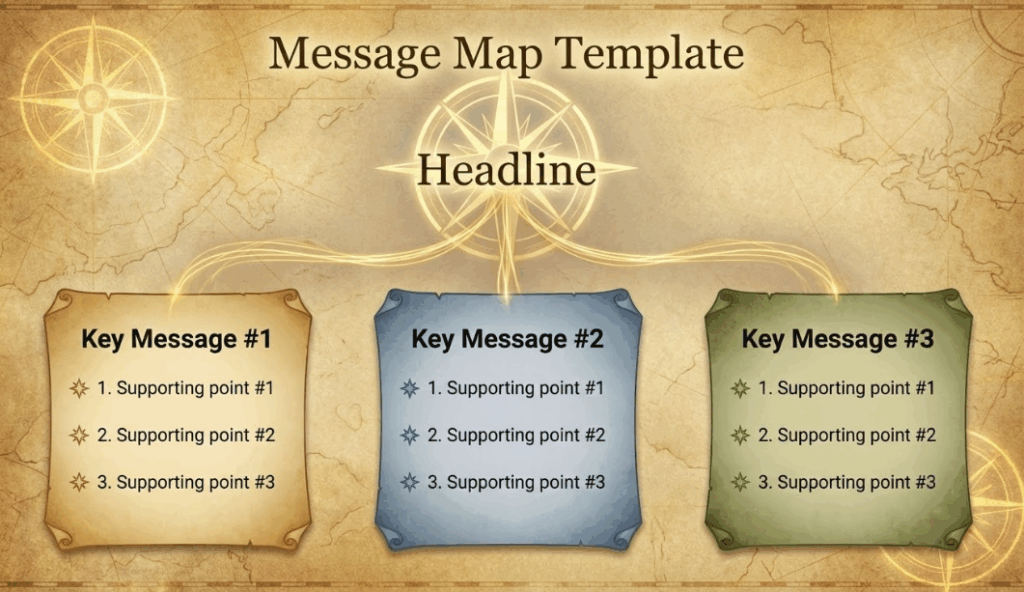
Step 5½: Create a Message Map
A Message Map organizes your presentation to be compelling and tight:
- Headline: What is the key takeaway
- Three Key Points: Identify the 3 pillars of your argument
- Supporting Sub-Points: Map out the stories, data, analogies, and benefits you will use
Step 6: Plan for Objections
Objections are part of the process. Ask proactively:
- “What concerns might get in the way?”
- “What could prevent this from moving forward?”
Listen actively, keep an open mind, and respond while kindly reinforcing your value. Welcoming objections will boost credibility and increase your chances of achieving your Call to Action.
Mini Case Study
A national building services company struggled with non-compelling sales presentations. Excelsior Learning introduced a Creativity Fit program focused on preparation, narrative development, and message mapping. With structured movement breaks and creative tools, the team learned to:
- Build engaging openings
- Craft narratives aligned with customer priorities
- Present stories and economic arguments that resonate
- Deliver consistent, high-value, action-focused messages
Within three months, the company reported stronger engagement, more compelling presentations, and measurable increases in perceived value.
Take YOUR Presentation Skills Further
Our program, “Stick It Presentations,” helps individuals and teams be more compelling and sharpen their message, elevate their presence, catalyze ACTION, and claim more value in every meeting and presentation.
Using creative thinking tools, storytelling frameworks, and movement-based strategies, this interactive program builds confidence and the ability to deliver compelling presentations that drive results.
Ready to learn more? Click HERE to see the program outline.
